Theme 2: Self-Directed, Active Learning, and Computational Curiosity
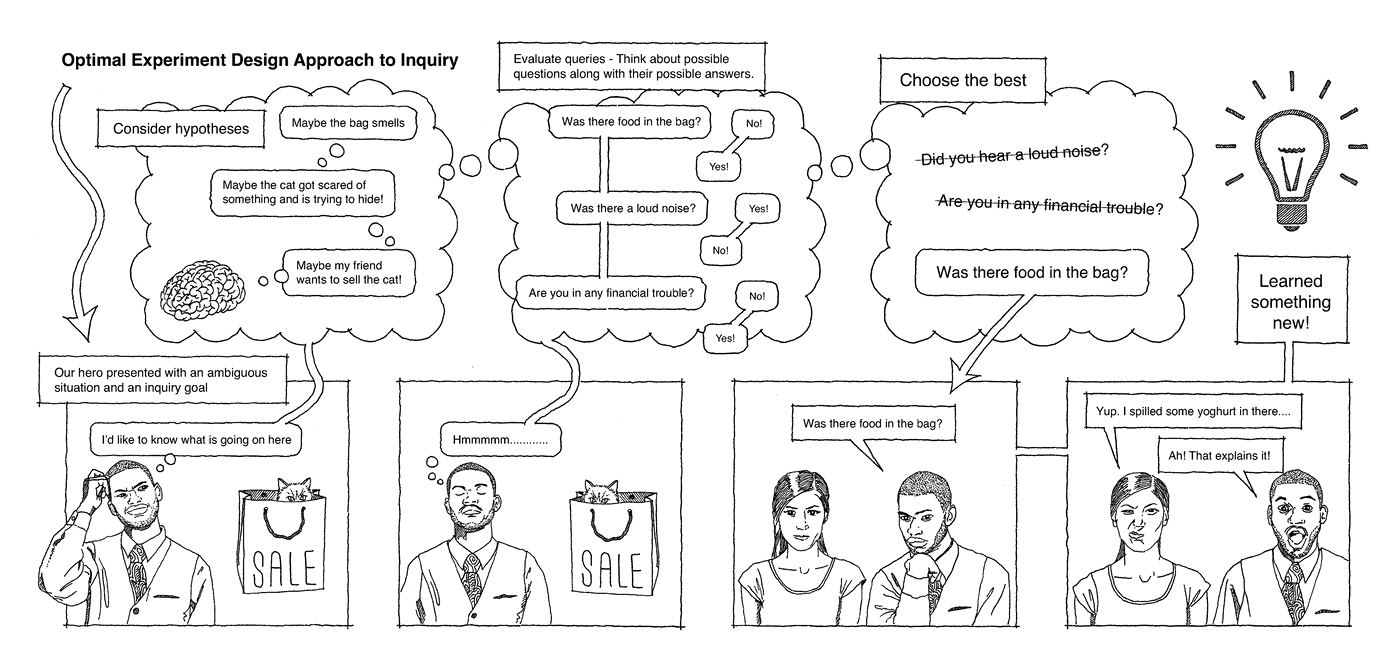
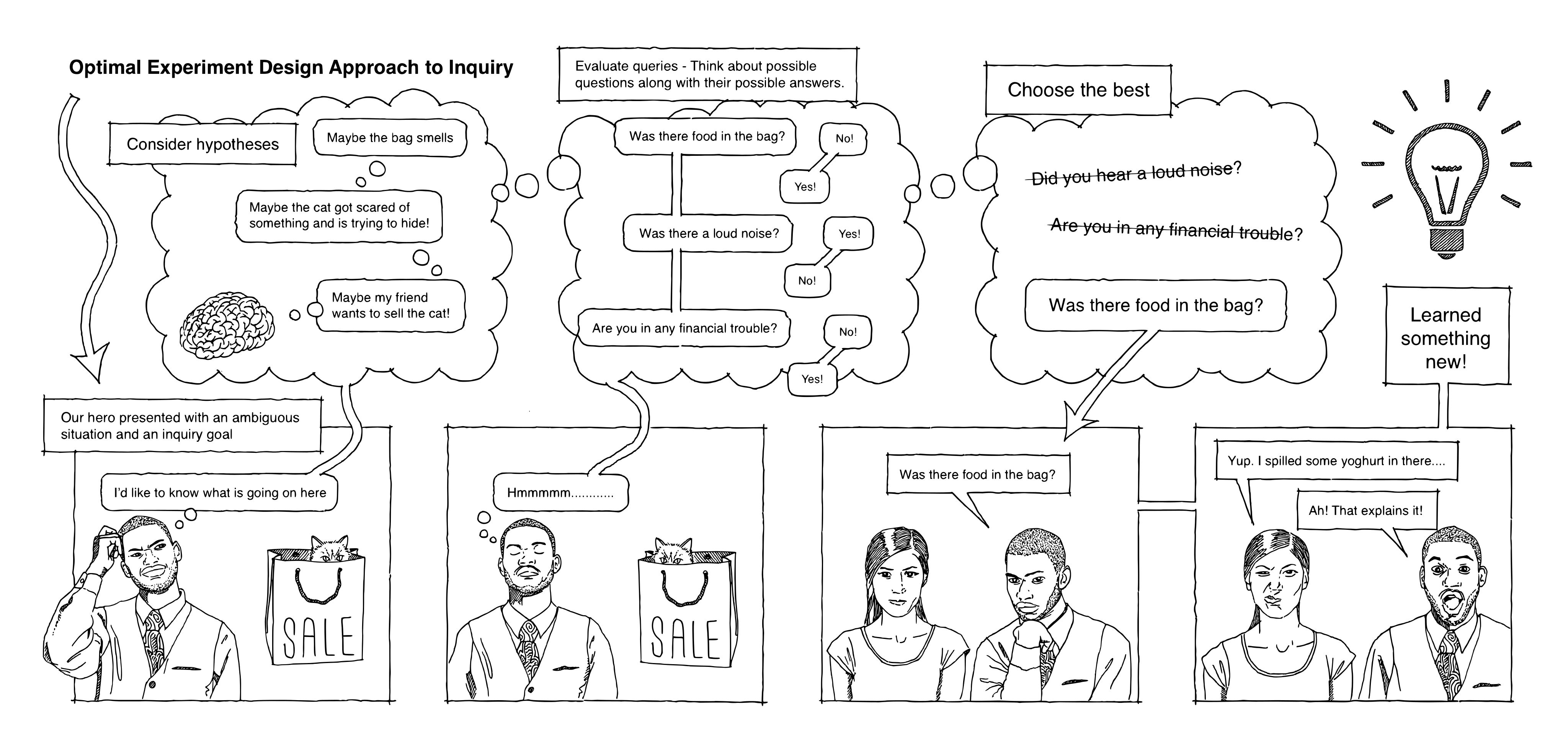
Unlike today's machine learning systems, children are remarkable in their ability to bootstrap knowledge from independent, self-guided interactions with the world. They ask questions, curiously explore new toys, and push at the boundaries of what they currently know on their own, often without a teacher or parent.
Our lab has been interested in understanding the nature of this human ability in computational terms. How can we figure out how something works by tinkering with it? How do we formulate and ask creative questions that reveal helpful information about abstract concepts? How do we judge what actions we can take to obtain helpful information? How do our choices to gather information affect our learning and memory? How do we creatively propose new tasks for ourselves and learn from those to extend our abilities? Moreover, how do these abilities develop across the human lifespan?
Our lab is often inspired by research in machine learning which seeks to develop machines with intrinsic abilities and desires to learn. For example, the field of active machine learning studies learning algorithms that learn by choosing which examples are likely to be informative. Similarly, the field of intrinsic motivation examines how to give machines the capacity for exploration and discovery.
Imagine a computer that could program itself, building competencies as it gave itself new challenges. This is precisely the adaptive and life-long learning abilities that young children have! Our hope is that by studying how children and adults accomplish this, we can one day realize this vision.